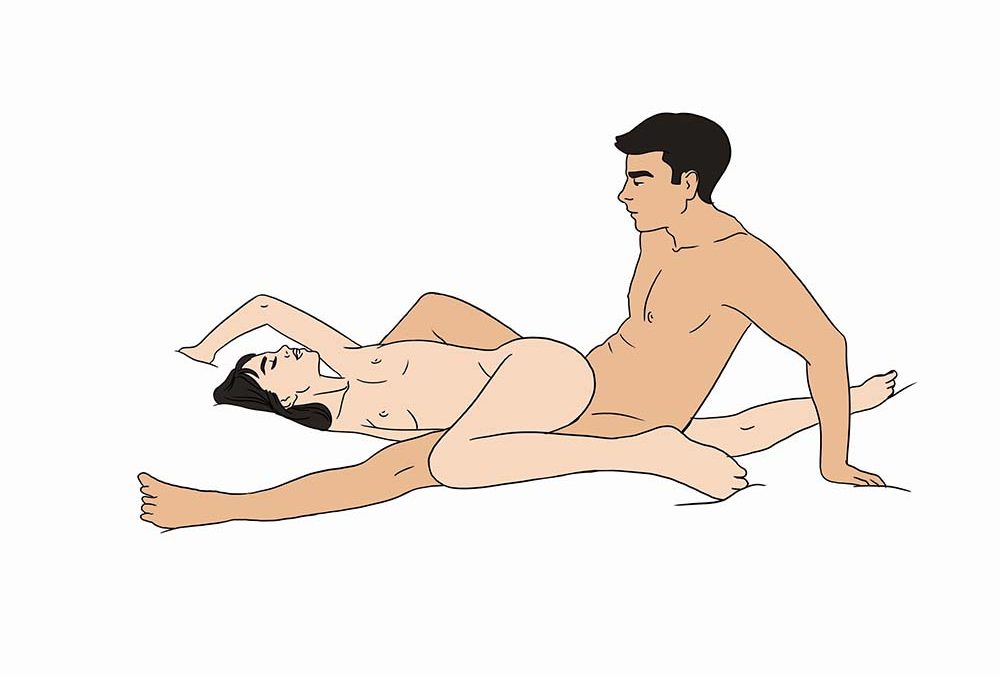
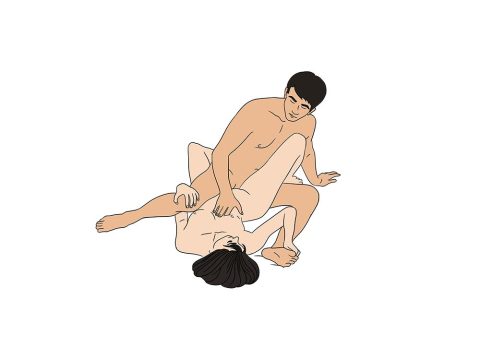
What is the Octopus Sex Position?
The Octopus is a creative, intertwined position where both partners slide and slip into a twisted configuration that emphasizes full-body connection. With limbs interlocking like tentacles, it challenges couples to coordinate closely while maintaining intimate contact. Ideal for partners seeking something fresh, it suits beginner to intermediate experience levels and rewards patience with deep physical and emotional closeness.
Quick stats
- Difficulty: Beginner to Intermediate
- Intimacy level: High
- Flexibility required: Moderate
- Best for: Couples seeking a novel, deeply connected experience that intertwines both bodies
How to do the Octopus Sex Position
- Partner A sits on a flat, stable surface with legs extended forward and leans back slightly, supporting their weight on both hands placed behind them.
- Partner B faces Partner A and sits on their lap, sliding into position so that both partners’ hips meet and legs extend past each other’s sides in an interlocking arrangement.
- Both partners twist their torsos slightly toward one another so that their upper bodies remain close, creating the signature “twisted” connection central to this position.
- Each partner wraps or hooks their legs around the other’s body — letting limbs overlap and intertwine — to stabilize the configuration and deepen contact.
- Movement is generated through a coordinated sliding and rocking motion, with both partners gently shifting their hips in rhythm while using their arms for balance and support.
Health and wellness benefits
- Core and stabilizer activation: Maintaining the twisted, seated configuration engages the abdominal muscles, hip flexors, and lower back stabilizers in both partners, offering a gentle functional workout.
- Enhanced emotional bonding: The close face-to-face orientation and full-body entanglement promote eye contact, synchronized breathing, and a sense of mutual vulnerability that can strengthen emotional trust between partners.
- Improved body awareness: Coordinating the sliding, interlocked movement pattern encourages proprioception and mindful attention to each other’s comfort, building communication skills that benefit intimacy well beyond the bedroom.
Variations
Supported Octopus
Partner A leans against a wall or headboard instead of supporting weight on their hands, freeing both arms to embrace Partner B and reducing strain on the wrists and shoulders.
Elevated Octopus
Perform the position on the edge of a bed or firm cushioned surface so that one partner’s feet can rest on the floor, providing additional leverage and making the rocking motion easier to sustain.
Slow-Rhythm Octopus
Both partners deliberately slow the tempo and focus on synchronized breathing and gentle micro-movements, transforming the position into a meditative, intimacy-building practice rather than a physically vigorous one.
Comfort and safety tips
- Place a folded towel or thin cushion beneath the seated partner’s hips to reduce pressure on the tailbone, especially on harder surfaces — partners with larger body frames may benefit from a wider, firmer cushion for additional support.
- If flexibility differences between partners make full leg intertwining uncomfortable, simply rest legs alongside each other rather than wrapping them; the twisted torso connection alone preserves the position’s character.
- Communicate continuously about wrist and lower-back fatigue, and shift weight or take brief pauses as needed — the sliding motion should feel fluid, never forced or painful.
Frequently asked questions
Is the Octopus position suitable for beginners?
Yes. While the intertwined arrangement looks complex, the actual movements are slow and controlled. Taking time to settle into a comfortable configuration before adding motion makes it accessible even for couples new to adventurous positions.
What surfaces work best for this position?
A firm mattress or padded floor surface offers the best balance of comfort and stability. Avoid very soft beds that make it difficult to maintain the seated posture, and always ensure the surface provides enough grip to prevent unwanted sliding.
How can we maintain the position comfortably for longer?
Switch between leaning back on the hands and sitting more upright to redistribute muscle effort. Periodically adjusting leg placement and taking slow, deep breaths together helps both partners stay relaxed and connected without tiring quickly.
Related positions
If you enjoy the twisted, interlocking nature of this position, explore the Corkscrew Sex Position for a similar rotational dynamic, or try The Winged Eros for another face-to-face configuration that emphasizes close physical and emotional connection.